WE CHANGE

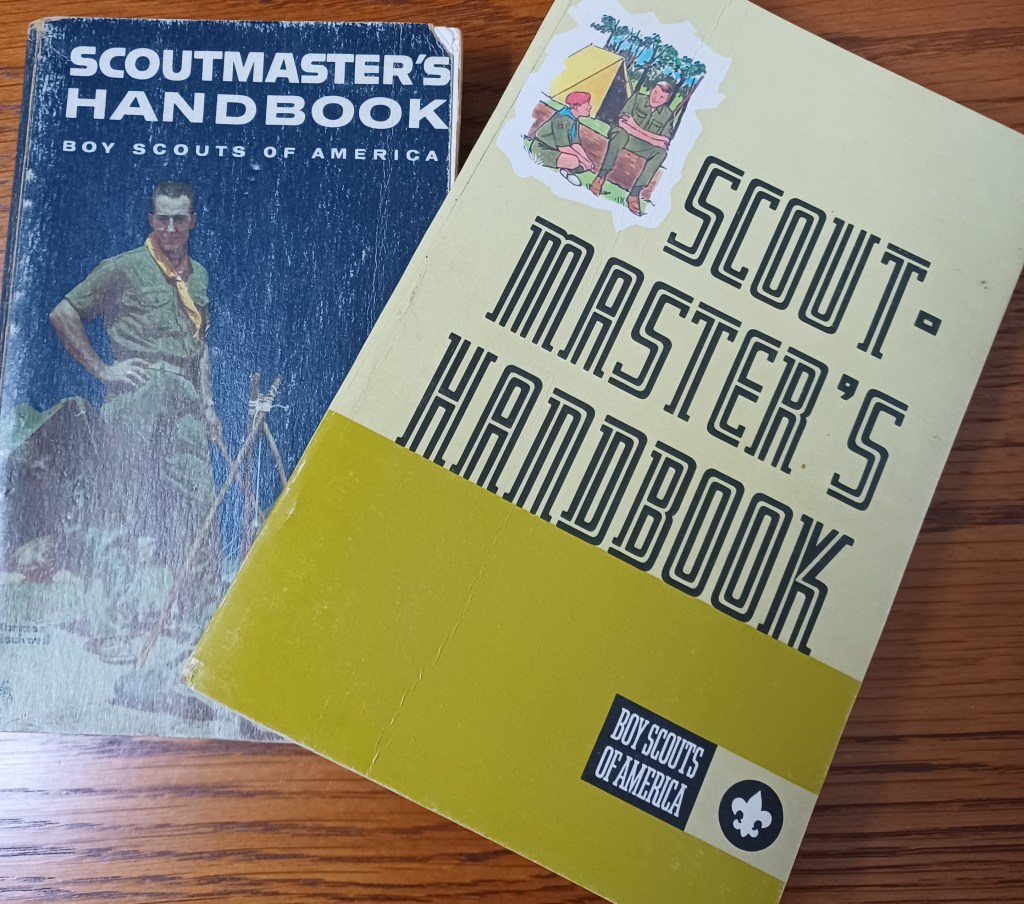
In the Sixth Edition of the 1972 Scoutmaster’s Handbook, page 79, there is a section titled “Where to Counsel”. Scoutmasters are identified as coaches, counselors, and friends. The where and how to counsel were described. “Every Scout in the Troop should understand that you counsel often with individuals. Every Scout should be made to respect your need to deal with the individual boy privately.”

Scouting’s culture of protection has changed so much that the quote from 1972 causes a strong sense of horror in Scouters. It is not the idea of working with Scouts, but the individual and “private” problem. Misunderstandings, like in the 1972 handbook, created an environment for abuse to happen. These perceptions were a part of our collective culture during the time. Two years later, in 1974, the Child Abuse Prevention and Treatment Act (CAPTA) passed. A first in our country shifting to protect children.

Change is an ongoing process for Scouting. BSA’s change to two deep leadership was critical. Youth Protection Training continues to improve. Before an applicant can join or volunteer with Scouting, the BSA verifies that he or she is not included in their database of individuals who have been prohibited from participation. The Volunteer Screening Database is in place to prevent the registration of individuals who do not meet the BSA’s standards due to known or suspected abuse or misconduct within or outside of the organization. This database is not available to charter partners. “Suspected abuse or misconduct” does not show up on a background check. Criminals or potential criminals will not put references on their applications identifying their wrong behavior. A charter can do due diligence and still be fooled.

Supporters of Scouting must depend upon the professional organization that determines membership and the rules of Youth Protection. I cannot tell you how many small rules, like water guns and water balloons, have surprised well-meaning Scouters. BSA has professionals for a reason. They are experts in the field who keep everyone safe. The rules are followed because BSA is trusted by those who have learned and is well ahead of the curve.

Change makes sense. The Scoutmaster Handbook changed. Change to the training and tracking protects youth, adults, and organizations. Is it time to realize we need to make small changes that will keep Scouting stronger and safer for the future?

It just makes sense now.

Restructuring does not mean doing the same old thing. Let us keep Scouting strong for generations together. Let us lead the change for a better future.

The Fifth Edition from 1965 and the Sixth Edition from 1972 ScoutMaster’s Handbook

Risk

All ministry comes with risk!

Would any have followed if Jesus had offered the invitation to the disciples the way a legal profession looks at it?

I can imagine the legal disclaimer. Peter, if you sign this contract to follow me, “you will stretch out your hands, and someone else will dress you and lead you where you do not want to go.” You will die for me.

These contract clauses are still there even if they are not explicitly defined. There is a risk for us to go into the world. It is the call and the mission.

Organizationally, we deal with risk through insurance. Some insurance groups will not insure a local church if they support the local Boy Scout unit with a traditional charter agreement. Loss of insurance impacts all ministries of the local church. The loss also impacts the conference. These insurance companies will support either an Affiliation Agreement or a Facilities Use Agreement. This limits our choice of connection. The short sight of some Councils may also have an impact. We will be as strong a partner as allowed. We want the long-term stable path.

Why not seek the path that offers the deepest rewards? That is supporting Scouting in the new agreements.  

It would have done no good for the disciples to die in the first year of the ministry than after the Gospel was shared. Keep the church around to serve in the future of a stronger ministry in the world and Scouting. Please.

Grace Methodist Moved Forward

Grace Methodist Church in Delaware, Ohio, maybe the first local church to sponsor a troop. In 1908, Rev. L. Eugen Rush wanted to keep Methodist boys off the streets. He founded the Eastside Roughnecks. The name was eventually changed to the East Side Gang, and they became involved in activities like Scout troops engage in today.

Rush later contacted Sir Robert Baden-Powell, a British military hero who founded the Boy Scouts in England.

Baden Powell sent Rush a charter, making East Side Gang a troop in the British Scouting movement.

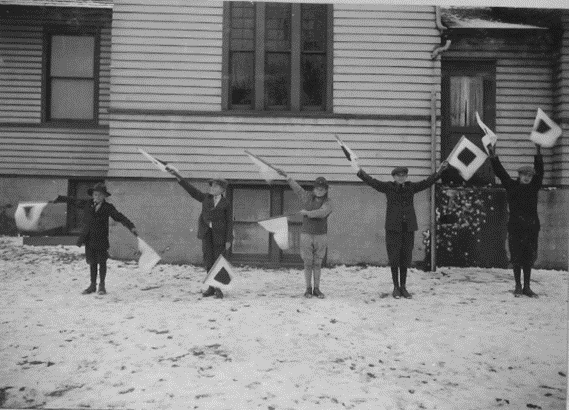
Boy Scouts from the turn of the century used semaphore flags to spell out S-C-O-U-T.
Copyright by The General Commission on Archives and History of The United Methodist Church. The United Methodist Archives and History Center. Madison, New Jersey

When the Boy Scouts of America started in 1910, Rush’s troop became Troop No. 1 in Delaware, Ohio. Now there is a Number One BSA Troop in each state and the District of Columbia. There were dozens of Methodist Churches in 1908-1909 that had established Boy Scout Troops. They joined the BSA after its creation in 1910. The pastor was often the first Scoutmaster. The connection of values, character and the church was natural.

Today, we follow in Rev. Rush’s pioneer footsteps in caring for youth. Why would Rush have ever given up his charter granted by the founder of Scouting? There was a new way. One that required change. A way that opened the door for connection long after Rev. Rush would be gone. It took trust and confidence to change. But that is what people who care for youth do.

United Methodist Men Stepping Up with Councils in Building Relationship

In 2018, Mountaineer Area Council selected Scott Hanson as their new Scout Executive. Scott had no idea what the next four years of serving would bring. His commitment to Scouting and growing the opportunity to serve youth has been a strong force for partnership.


The West Virginia United Methodist Men have hosted the Circuit Rider for 32 years. It is the largest West Virginia Conference gathering of youth. This year over 300 youth and their leaders attended the Jackson Mill event. Even with some dropped units due to Covid, the event was a great restart of the Scouting and United Methodist partnership.


The event reflected the commitment of the United Methodist Church and the Mountaineer Council to a future for youth. Conversations today surround how to stay connected. With Scott’s leadership and the conference commitment, conversations were about growth and opportunities for the Scouts. The relationship with the council is already on solid ground.


This year, each unit was encouraged to utilize the Circuit Rider as a recruiting tool by inviting up to four Scout-age guests. The West Virginia United Methodist Men paid the Scout unit $25 for each Scout-age guest who attended, up to $100 per unit.


Now think about that. What if all Councils decided serving youth was the mission first? The United Methodist Men respond to that kind of mission with commitment.


I am grateful for the way West Virginia leads! Scout on in faith!

Sunday Morning Scouts Own 32nd Circuit Rider at Jackson’s Mill, WV
Rev. Greg Godwin on Sunday Morning
One of the many historic mill stones located at Jackson’s Mill
Matthew 18:4-6 (NIV)
Therefore, whoever takes the lowly position of this child is the greatest in the kingdom of heaven. And whoever welcomes one such child in my name welcomes me.
“If anyone causes one of these little ones—those who believe in me—to stumble, it would be better for them to have a large millstone hung around their neck and to be drowned in the depths of the sea.”

Pastors and P.R.A.Y.

I have heard that some pastors within The United Methodist Church are reluctant to be involved with PRAY Programs. There is a misunderstanding that PRAY is a part of the Boy Scouts of America. This misunderstanding has made them wary of possible liability from participating in the religious education of youth. My hope is to clarify so you are free to live into the mission of the church and the call of Christ.

Programs of Religious Activities with Youth (P.R.A.Y.) is a non-profit organization aimed at fostering the Christian growth of children, youth, and families through churches.

P.R.A.Y. is the administrative agency for religious recognition for Protestant youth who are registered members of the American Heritage Girls, Boy Scouts of America, and Girl Scouts of the USA.  There are other organizations that use the program but do not have a formal relationship.   

P.R.A.Y. is also a proud Affiliate Partner of the General Commission on United Methodist Men and the Center for Scouting Ministries (https://www.praypub.org/Data/Sites/1/media/denomination-resources/united-methodist/prayawards_gcumm.pdf). 

The Religious Emblems programs are developed by national religious organizations to encourage their members to grow stronger in their faith. The scouting agencies have approved of these programs and allow the awards to be worn on the official uniforms, but the emblems are created and administered by various religious groups.

P.R.A.Y. develops the religious emblems curriculum and recognition program for Protestant and Independent Christian churches. The General Commission on United Methodist Men has supported religious education through P.R.A.Y. for years. P.R.A.Y. is listed within the United Methodist Book of Discipline. I have seen it used as a portion of confirmation curriculum. I have taught multiple classes and received great joy from sharing my faith.

P.R.A.Y. does not have registered volunteers.  Therefore our leadership requirements for classes or sessions should meet the requirements of the youth member’s agency affiliation and congregation.  In all of our materials and training, we ensure that mention is given regarding online and in-person requirements for youth protection. 

The costs for P.R.A.Y. materials are minimal.  Booklets depending on the program range from $5- $8 and are required for the student and the teacher/counselor.  Depending on the recognition choice selected, there are different levels of cost ($1 for certificate, $5 for the patch, $7.50 for the lapel pin, and $12.50 for the medallion).

We have many churches that with the support of their congregation and Scout leaders deliver classes annually.  For some churches, the pastor or their designee serves as the Counselor, while recognizing that faith formation starts in the home. We serve with parents that are serving as well. 

https://www.praypub.org/

A short video explaining P.R.A.Y. from a pastor-to-pastor perspective is located here: https://methodistscouter.org/p-r-a-y-builds-faith-within-the-umc/

Thank you for serving the church, the community, and most of all Christ!